Bureau of Economic Geology Publications
| Title | Publication Year Sort ascending | Abstract | Author | Publisher | |
|---|---|---|---|---|---|

|
History of Geology at The University of Texas | 1967 | This history of geology at The University of Texas was prepared for the dedication of the new Geology Building, November 1967. It is a brief history; many details have been omitted. The names of most graduates and some faculty will not be found. |
Young, Keith | Bureau of Economic Geology |
|
Depositional systems in the Wilcox Group of Texas and their relationship to occurrence of oil and gas | 1967 | Regional investigation of the lower part of the Wilcox Group in Texas in outcrop and subsurface indicates seven principal depositional systems. These include: (1) Mt. |
Fisher, W.L., McGowen, J.H. | Bureau of Economic Geology |
|
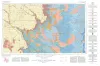
Geologic Atlas of Texas, Lubbock sheet (revised 1993) | 1967 | Geologic map that depicts surface geology of Crosby, Dickens, and King Counties and parts of Hale, Floyd, Motley, Cottle, King, Lubbock, Lynn, Garza, Kent, and Stonewall Counties. The Lubbock Sheet honors the late Dr. |
Eifler, G.K., Frye, J.C., Leonard, A.B., Hentz, T.F., Barnes, V.E. | Bureau of Economic Geology |
|
The Mineral Industry of Texas in 1966 | 1967 | Netzeband, F.F., Girard, R.M. | Bureau of Economic Geology | |
|
Lower Cretaceous sands of Texas: stratigraphy and resources | 1967 | Lower Cretaceous sands have long been important aquifers in Central, North-Central, and North Texas. In recent years these sands also have been sources of high-silica industrial or specialty-purpose sand. |
Fisher, W.L., Rodda, P.U. | Bureau of Economic Geology |
|
Sand resources of Texas gulf coast | 1967 | This report deals with the occurrence and potential production of industrial sand in the Gulf Coast area of Texas. The study area covers approximately 23,000 square miles underlain by alluvial, deltaic, beach, and eolian deposits of Pleistocene and Recent age. |
Garner, L.E. | Bureau of Economic Geology |
|
Geologic Atlas of Texas, Texarkana sheet (reprinted 1979 with base revised) | 1966 | Geologic map that depicts the surface geology of Lamar, Red River, Bowie, Delta, and Titus Counties and parts of Fannin, Hunt, Camp, Cass, Hopkins, Franklin, and Morris Counties, Texas. The 6-page booklet indicates geologic formations, abbreviations, and ages. |
Barnes, V.E., Humble Oil and Refining Co., Shell Oil Co., Pan American Petroleum Corp., Arkansas Geological and Conservation Commission, Oklahoma Geological Survey, McCallum, H.D., Wendlandt, E.A. | Bureau of Economic Geology |
|
Geologic map of the Big Bend National Park, Brewster County, Texas | 1966 | Maxwell, R.A. | Bureau of Economic Geology | |
|
Limestone and dolomite resources, Lower Cretaceous rocks, Texas | 1966 | Limestone is one of the most important nonfuel mineral resources in Texas. Annual production exceeds $30 million; value added in the manufacture of such products as cement and lime amounts to about $100 million annually. |
Rodda, P.U., Fisher, W.L., Payne, W.R., Schofield, D.A. | Bureau of Economic Geology |
|
Sedimentary petrology and history of the Haymond Formation (Pennsylvanian), Marathon Basin, Texas | 1966 | This report treats the sedimentary petrology and history of the Haymond Formation, a monotonous sequence of interbedded sandstone and shale that has a maximum preserved thickness of 4,300 feet. |
McBride, E.F. | Bureau of Economic Geology |