Bureau of Economic Geology Publications
| Title | Publication Year Sort ascending | Abstract | Author | Publisher | |
|---|---|---|---|---|---|
|
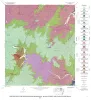
Geologic map of the Round Mountain quadrangle, Blanco, Burnet, and Llano counties. Texas | 1978 | Barnes, V.E. | Bureau of Economic Geology | |
|
Electric Power Generation from Texas Lignite | 1978 | Lignite is a rediscovered energy in Texas because lignite-produced energy is 3 to 7 times cheaper than intrastate natural gas. Production has risen from 18,000 short tons in 1950 to 14 million tons in 1976 and will exceed 50 million tons by 1985. |
Kaiser, W.R. | Bureau of Economic Geology |
|
Sand-body geometry and the occurrence of lignite in the Eocene of Texas | 1978 | Lignite occurs in three Eocene stratigraphic units--the Wilcox Group, Yegua Formation, and Jackson Group--and in three ancient depositional systems-fluvial, deltaic, and strandplain/lagoonal. |
Kaiser, W.R., Johnston, J.E., Bach, W.N. | Bureau of Economic Geology |
|
Texas Energy Reserves and Resources | 1978 | Contributing about 25 percent of all the energy ever produced in the United States, Texas has for 50 years led the nation in energy production. |
Fisher, W.L. | Bureau of Economic Geology |
|
Proceedings, Gulf Coast Lignite Conference: Geology, Utilization, and Environmental Aspects | 1978 | Papers in this volume were presented at the Gulf Coast Lignite Conference held in Austin, Texas, June 1976. |
Kaiser, W.R., McNulty, J.E. | Bureau of Economic Geology |
|
Identification of surface faults by horizontal resistivity profiles, Texas coastal zone | 1978 | The land surface in the Texas Coastal Zone is interlaced with active and potentially active surface faults. They are subtle features which are difficult to identify until they have caused damage to manmade structures. To date (1978), significant damage has resulted. |
Kreitler, C.W., McKalips, D.G. | Bureau of Economic Geology |
|
Frio sandstone reservoirs -- in the deep subsurface along the Texas Gulf Coast; their potential for production of geopressured geothermal energy | 1978 | Tertiary strata of the Texas Gulf Coast comprise a number of terrigenous depositional wedges, some of which thicken abruptly at their downdip ends as a result of contemporaneous movement of growth faults and underlying salt. |
Bebout, D.G., Loucks, R.G., Gregory, A.R. | Bureau of Economic Geology |
|
National Energy Policy: A Continuing Assessment | 1978 | Bureau of Economic Geology | ||
|
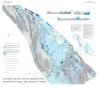
Tectonic map of the Rio Grande area, Trans-Pecos Texas and adjacent Mexico | 1977 | Henry, C.D., Bockoven, N.T. | Bureau of Economic Geology | |
|
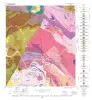
Geology of the Click Quadrangle, Llano and Blanco Counties, Texas | 1977 | Barnes, V.E. | Bureau of Economic Geology |