
Analysis during the second year was highlighted by a historical characterization of East Texas Basin infilling, the development of a model to explain the growth history of the domes, the continued studies of the Quaternary in East Texas, and a better understanding of the near-dome and regional hydrology of the basin. Each advancement represents a part of the larger integrated program addressing the critical problems of geologic and hydrologic stabilities of salt domes in the East Texas Basin.
Lignite development will place major demands on ground-water supplies. The Simsboro Formation and the Calvert Bluff Formation (a major lignite-bearing unit) of the Wilcox Group between the Colorado and Trinity Rivers constituted a test case to evaluate the availability and quality of ground water. Aquifer geometry (sand) was determined by comparing environmental geologic maps with subsurface sand-percent and net-sand maps constructed from electric logs (Kaiser, 1978).
Five distinct facies are recognized in the Eocene Queen City exposures between the Trinity River valley and the Louisiana state boundary. These facies (fluvial, deltaic, tidal flat, barrier, and tidal delta) display diagnostic suites of physical and biogenic structures. Sandstones within these facies exhibit substantial differences in paleocurrent pattern.
Sediments of the Texas inner shelf are generally fine grained; coarse clasts ( > 0.5 mm) are uncommon (< 1%) over much of the area. Higher concentrations of coarse material, however, occur in discrete areas that apparently represent positions of foyer deltas. Coarsest constituents are predominantly whole shells and shell fragments with subordinate amounts of lithic clasts. The calcareous skeletal debris represents a mixture of extant shelf fauna and relict brackish-water molluscs includingRangia spp. and Crassostrea uirginica.
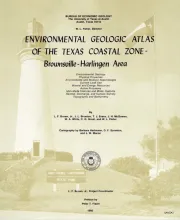
The Texas Coastal Zone is marked by diversity in geography, resources, climate, and industry. It is richly andowed with extensive petroleum reserves, sulfur and salt, deep-water ports, intracoastal waterways, mild climate, good water supplies, abundant wildlife, commercial fishing resources, unusual recreational potential, and large tracts of uncrowded land in close proximity to major population centers.