
Publication Year
1998
Publisher
Series
Open-File Map
Publication Year
1998
Publisher
Series
Guidebook
Abstract
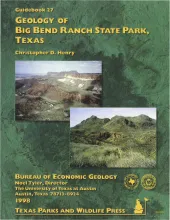
Big Bend Ranch State Park, the largest in the Texas State Parks System, lies in the rugged Big Bend country of West Texas (figs. 1 and 2). The primary attraction of Big Bend country is its scenery, and scenery is geology. The mountains, canyons, plateaus, rivers, waterfalls, and, indeed, every aspect of the natural landscape result directly from geologic processes of rock formation and erosion. In Big Bend country, these processes include mountain building, volcanism, faulting, and erosion. Taken together, they have shaped the land into the rich vistas we enjoy today.
Publication Year
1997
Publisher
Series
Miscellaneous Map
Abstract
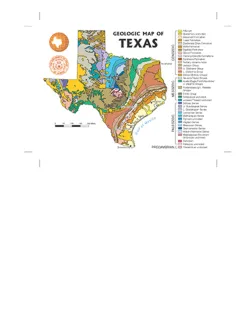
A 4x6" postcard showing the geology of Texas
Publication Year
1997
Series
Gulf Coast Association of Geological Societies
Publication Year
1997
Publisher
Series
Austin Geological Society