
The basic geometry of an onshore three-dimensional (3-D) seismic recording grid is based on five parameters: source-station spacing, receiver-station spacing, source-line spacing. receiver-line spacing, and recording swath size. At each onshore prospect considered for 3-D seismic imaging, these key design parameters can be specified by answering four simple questions: 1. What is the narrowest lateral dimension of the geologic targets that are to be imaged? 2. What is the depth of the shallowest target that must be imaged? 3. What is the depth of the deepest target that must be imaged? 4.
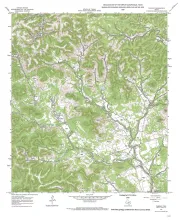
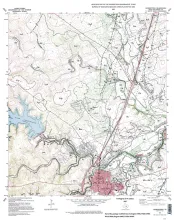
This report details the occurrence, geometries, scarp morphology, and paleorupture histories of Quaternary faults of northwest Trans-Pecos Texas and northern Chihuahua, Mexico. This study area encompasses a part of the east margin of the Southern Basin and Range-Rio Grande rift tectonic province. Pre-Cenozoic tectonism and its influence on the Cenozoic structural history is also reviewed. Basins studied include the Hueco, Red Light, Northwest and Southeast Eagle Flat, Green River, Salt, Wild Horse, Lobo Valley, and Ryan Flat Basins.
The Leonardian Spraberry Formation is a major oil-producing formation of the Permian Basin, accounting for more than 700 million barrels of oil produced from heterogeneous submarine-fan reservoirs. Extensive exploration and development of the Spraberry and deeper reservoirs provide the opportunity to establish the sedimentary evolution of a fan cone fed only by relatively small rivers and windblown sediment in a tectonically inactive setting.