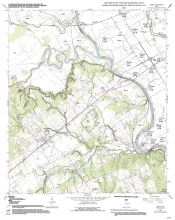
Written for a nontechnical audience, this guide describes the Tuff Canyon area in detail and includes a glossary of terms that might be unfamiliar to non-geologists. Color photographs and sketches depict the geologic features, fauna, and flora of this part of Big Bend National Park. Geologic and topographic maps of the Tuff Canyon area provide a rich context for visitors who can explore the trails while learning about the landscape and history of the area.
This report summarizes results of an integrated geological, geophysical, petrophysical, and engineering study of a representative Delaware Mountain Group field to identify constraints on producibility in the deep-water sandstone reservoir exhibiting low primary recovery efficiency. The Ramsey sandstone interval of the Bell Canyon Formation was characterized in the Ford Geraldine unit, Culberson and Reeves Counties, Texas, using data from outcrops, subsurface logs and cores, and a 3-D seismic survey.
A multidisciplinary reservoir-characterization study of the Ellenburger Group was conducted over a 176-mi2 3-D seismic grid in Pecos, Reeves, and Ward Counties in the southern Delaware Basin of West Texas. The study area covered Lockridge, Waha, and West Waha fields and parts of Worsham-Bayer and Coyanosa fields, which have produced 1.3 trillion standard cubic feet of natural gas since their discoveries in the 1960's. Seismic time-structure and depth maps were generated for the tops of the Bone Spring-3, Mississippian, Devonian (Woodford), and Ellenburger.