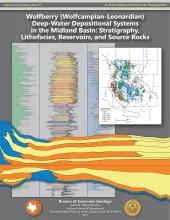
The Wolfberry play in West Texas combines favorable geology with innovative completion practices to form one of the largest unconventional oil plays in the United States. Wolfberry wells produced almost 55 million barrels of oil in 2011, and that figure could double in a few years. In this report, the authors used wireline logs to correlate and map stratigraphic intervals and drill cores to characterize lithofacies and calibrate wireline logs for lithofacies identification and mapping beyond cored wells.
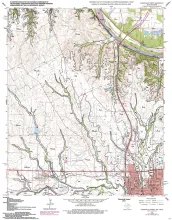
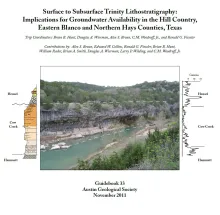
This field trip is a follow-up and complement to the publication of the Hydrogeologic Atlas of the Hill Country Trinity Aquifer, Blanco, Hays, and Travis Counties, Central Texas (referenced as Wierman et al., 2010 or “HA” throughout this guidebook). For reference, the HA is included as an Appendix at the end of this guidebook. The HA and work presented in this guidebook builds upon the analyses done by many geoscientists—too many to name here, but many are included in the references of the HA.