Publications in Texas
| Title | Publication Year Sort ascending | Abstract | Author | Series | Publisher | |
|---|---|---|---|---|---|---|
|
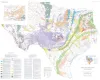
Mineral resources of Texas | 1979 | The Mineral Resources of Texas map is designed to illustrate the historical and current (as of 1976) distribution of industrial mineral occurrences and production sites in Texas. |
Garner, L.E., St. Clair, A.E., Evans, T.J. | Energy and Mineral Resource Maps | Bureau of Economic Geology |
|
Sand-body geometry and the occurrence of lignite in the Eocene of Texas | 1978 | Lignite occurs in three Eocene stratigraphic units--the Wilcox Group, Yegua Formation, and Jackson Group--and in three ancient depositional systems-fluvial, deltaic, and strandplain/lagoonal. |
Kaiser, W.R., Johnston, J.E., Bach, W.N. | Geological Circular | Bureau of Economic Geology |
|
Frio sandstone reservoirs -- in the deep subsurface along the Texas Gulf Coast; their potential for production of geopressured geothermal energy | 1978 | Tertiary strata of the Texas Gulf Coast comprise a number of terrigenous depositional wedges, some of which thicken abruptly at their downdip ends as a result of contemporaneous movement of growth faults and underlying salt. |
Bebout, D.G., Loucks, R.G., Gregory, A.R. | Report of Investigations | Bureau of Economic Geology |
|
Texas Energy Reserves and Resources | 1978 | Contributing about 25 percent of all the energy ever produced in the United States, Texas has for 50 years led the nation in energy production. |
Fisher, W.L. | Geological Circular | Bureau of Economic Geology |
|
Electric Power Generation from Texas Lignite | 1978 | Lignite is a rediscovered energy in Texas because lignite-produced energy is 3 to 7 times cheaper than intrastate natural gas. Production has risen from 18,000 short tons in 1950 to 14 million tons in 1976 and will exceed 50 million tons by 1985. |
Kaiser, W.R. | Geological Circular | Bureau of Economic Geology |
|
Land resources of Texas | 1977 | Texas is endowed with an enormous variety of natural land resources that vary from the humid forest lands of East Texas to the vast desert lands of Trans-Pecos, from the swamps and marshes of the Texas Coastal Zone to the arid plains of the Panhandle, and from the rich farmland of Central Texas t |
Kier, R.S., Garner, L.E., Brown, L.F., Jr., University of Texas at Austin, Bureau of Economic Geology | Selected Reports | Bureau of Economic Geology |
|
Cretaceous Carbonates of Texas and Mexico: Applications to Subsurface Exploration | 1977 | The objectives of this symposium [were] (1) to bring together individuals from universities and industry who have conducted research on Cretaceous carbonates, in order to accelerate communication, exchange ideas, and discuss differences of opinion; (2) to emphasize subsurface carbonate studies bu |
Bebout, D.G., Loucks, R.G. | Report of Investigations | |
|
The Gulf shoreline of Texas: processes, characteristics, and factors in use | 1977 | The State of Texas has about 367 miles of open Gulf shoreline, most of it typified by rather broad, sandy beaches and a comparatively mild climate that permits almost year-round use of this recreational resource. All but about 87 miles of the Gulf beach is accessible to the general public. |
McGowen, J.H., Garner, L.E., Wilkinson, B.H. | Geological Circular | Bureau of Economic Geology |
|
Depositional systems in the Sparta Formation (Eocene) Gulf coast basin of Texas | 1977 | Three principal depositional systems were defined within the Sparta Formation of Texas using surface and subsurface data: high-constructive delta system in east Texas; strandplain-barrier bar system in central Texas; and high-destructive, wave-dominated delta system in south Texas. |
Ricoy, J.U., Brown, L.F., Jr. | Geological Circular | Bureau of Economic Geology |
|
Depositional systems in the Paluxy Formation (Lower Cretaceous), northeast Texas -- oil, gas, and ground water resources | 1977 | The Paluxy Formation is a stratigraphic unit which is composed of sandstone and shale and extends across the northern part of the East Texas embayment. |
Caughey, C.A. | Geological Circular | Bureau of Economic Geology |