
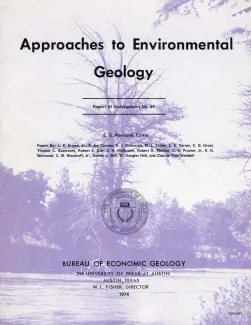
The environmental geology program of the Bureau of Economic Geology is designed to develop applicable geologic data for both immediate and long-term needs. The case studies presented in Approaches to Environmental Geology represent completed or ongoing projects conducted in different parts of a diverse State. While common basic orientation has been assumed, specific approaches have been designed in each area. A goal of this colloquium is to relate the experience of an environmental geology program conducted as an organized research effort in the public sector.
Annual report for the Bureau of Economic Geology 1974
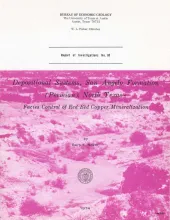
The San Angelo Formation is a mid-Permian sandstone and mudstone sequence about 100 feet thick that crops out in North Texas and dips westward into the Midland Basin; it is composed of two superposed members: the basal Duncan Sandstone Member and the overlying Flowerpot Mudstone Member. Depositional systems within the Duncan Member include the Copper Breaks deltaic system in the north, the Old Glory fluvial-deltaic system in the south, and the intermediate, strike-fed Buzzard Peak sand-rich tidal-flat system.
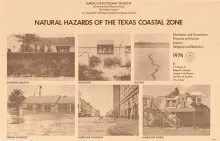
The Texas Coastal Zone is marked by diversity in geography, resources, climate, and industry. It is richly endowed with extensive petroleum reserves, sulfur, and salt, seaports, intracoastal waterways, a mild climate, good water supplies, abundant wildlife, rich agricultural lands, commercial fishing resources, unusual recreational potential, and large tracts of uncrowded land.