

The conservation movement has grown enormously in strength and breadth during the last decade as a result of widespread concern about natural resources and the quality of the environment. The Federal leadership broadened the definition of conservation to applied ecology and thereby put a meaning into the word that went far beyond its original sense. Conservation now includes all of the physical, social, and legal problems attendant on use of the land.
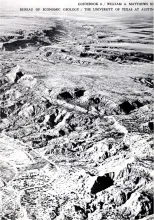
Like the early Spanish explorers who first saw Palo Duro Canyon, today's visitor is likely to view the impressive canyon with surprise and awe. This great depression - it is more than 2 miles wide and as much as 800 feet deep within park boundaries - contains a fascinating assortment of multicolored geologic formations and erosion-produced rock sculptures of many shapes, colors, and sizes. The geographic setting of the canyon further heightens its impact on the visitor, for it is surrounded by the level, virtually treeless plains of the Texas Panhandle.
Sulfur, along with salt, coal, and limestone, is one of the basic raw materials of the chemical industry. A nation’s per capita sulfur consumption is a reliable index to its chemical production and a rough index to its standard of living. Sulfur, with its many properties, has literally hundreds of uses; most is used in the manufacture of fertilizers, fibers, papers, pigments, pharmaceuticals, and explosives.Sulfur or brimstone is one of the oldest elements known to man. It was used more than 4,000 years ago in rituals of sacrifice and as a bleaching agent for cotton.
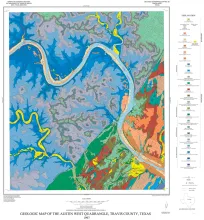
The rocks exposed in the Austin West quadrangle are Cretaceous marine limestones and clays and Quaternary alluvial deposits. The Cretaceous rocks dip gently eastward and are broken by one large (Mount Bonnell) fault and numerous small, northeast-trending faults comprising the Balcones fault zone. Most faults are downthrown to the east; total displacement across the fault zone is about 1,000 feet.