
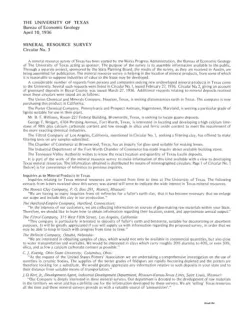
A mineral resource survey of Texas has been started by the Works Progress Administration, with the Bureau of Economic Geology of The University of Texas acting as sponsor. The purpose of the survey is to assemble information available to the public. Through a separate project, sponsored by the State Planning Board, the results of the survey, as they are received in Austin, are being assembled for publication. The mineral resource survey is helping in the location of mineral products, from some of which it is reasonable to suppose industries of value to the State may be developed.
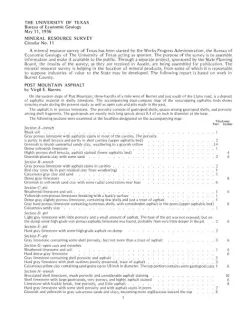
A mineral resource survey of Texas has been started by the Works Progress Administration, with the Bureau of Economic Geology of The University of Texas acting as sponsor. The purpose of the survey is to assemble information and make it available to the public. Through a separate project, sponsored by the State Planning Board, the results of the survey, as they are received in Austin, are being assembled for publication.
A mineral resource survey of Texas has been started by the Works Progress Administration, with the Bureau of Economic Geology of The University of Texas acting as sponsor. The purpose of the survey is to assemble information and make it available to the public. Through a separate project, sponsored by the State Planning Board, the results of the survey, as they are received in Austin, are being assembled for publication.