

This report presents stratigraphic data and interpretations pertaining to the origin of a continental shelf-ocean basin sedimentary complex developed during Lower Cretaceous time in northern Coahuila, Mexico. This shelf was developed within a carbonate depositional regime and provides a specific descriptive example which should be useful in the development of a comprehensive process-response model of shelf origin.
The conservation movement has grown enormously in strength and breadth during the last decade as a result of widespread concern about natural resources and the quality of the environment. The Federal leadership broadened the definition of conservation to applied ecology and thereby put a meaning into the word that went far beyond its original sense. Conservation now includes all of the physical, social, and legal problems attendant on use of the land.
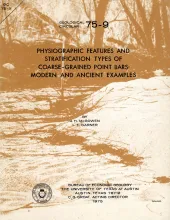
Primary sedimentary structures in modern point-bar deposits of the Amite River in Louisiana and the Colorado River in Texas are analogous to features observed in Eocene Simsboro and Pleistocene Colorado River deposits of the Texas Gulf Coastal Plain.
Trilobites collected during the past 20 years from the Morgan Creek, Point Peak, and San Saba Members of the Wilberns Formation comprise 89 species assigned to 45 genera belonging to zones of the upper Franconian and Trempealeauan Stages of the Upper Cambrian Croixan Series. New zonal names are proposed in the interest of a regionally applicable nomenclature. Although none of the zonal nomenclature is identical to that of the 1944 Cambrian Correlation Chart of Howell�et al.,�the four zones recognized in central Texas are equivalent to the eight highest zones on the Chart.