
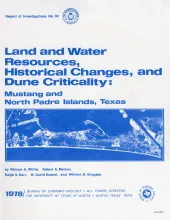
Barrier islands along the Texas Coastal Zone are part of a complex and dynamic system represented by many distinct yet interrelated environments affected by a variety of resources, natural processes, climatic conditions, and human activities. Because of the increasing realization that island resources are extremely important both as natural systems and as valuable recreational areas, the necessity of understanding their complexities and how man and his activities interact with them becomes more and more urgent.
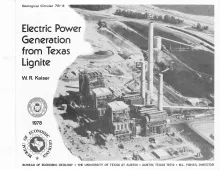
Lignite is a rediscovered energy in Texas because lignite-produced energy is 3 to 7 times cheaper than intrastate natural gas. Production has risen from 18,000 short tons in 1950 to 14 million tons in 1976 and will exceed 50 million tons by 1985. Currently installed lignite-fired generating capacity is 3410 MW and may reach 11,475 MW in 1985. Steam-electric stations up to 3000 MW, are planned; individual generating units are 120 to 750 MW.
The Washita Group in North-Central Texas and southeastern Oklahoma consists of up to 114 m of intercalated shale, limestone, and sandstone that accumulated in the shallow, epicontinental sea of the East Texas Basin. The Ouachita-Arbuckle Mountains to the north supplied terrigenous sediments, and the Central Texas platform to the south was a site of carbonate deposition leeward of the shelf margin of the Stuart City trend. Eleven lithofacies of the Washita were deposited within a repeatedly subsiding shelf basin that received an intermittent supply of terrigenous sediment.