A deposit of phosphorite, estimated to be 11 feet thick, was found March 26, 1952, while the writer was mapping ancient sink fillings and collapse structures within the outcrop area of the Honeycut formation south of Marble Falls, Texas. The phosphorite is exposed in a road material pit on the eastern side of a Carboniferous outlier. It rests on shale typical of that in the Barnett formation of Mississippian age and is beneath spiculitic limestone at the base of the Pennsylvanian Marble Falls limestone.
Sixty-eight species of trilobites, 10 species of inarticulate brachiopods, two species of articulate brachiopods, one ostracode and fragments of sponges, pelmatozoan echinoderms and unidentifiable organisms constitute the faunas of the Riley formation. The fossils were collected from eight measured sections around the periphery of the outcrop area in Mason, Gillespie, Blanco, Burnet, Llano and SanSaba counties, Texas. All of the fossils are described and illustrated by stereophotographs.
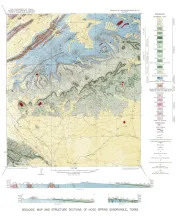
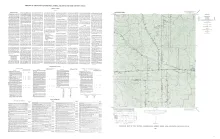
Wendel quadrangle is entirely within the Edwards Plateau province and is situated southwest of the Llano region.
The geology of the Wendel quadrangle is shown on a planimetric map, and the only topographic map available is the reconnaissance 30-minute Kerrville quadrangle. Elevations ranging between 2,041 and 2,284 feet were determined during traversing for control, but neither the highest nor the lowest elevation was reached. However, it is estimated that the relief within the quadrangle is about 270 feet, ranging between 2,020 and 2,290 feet.