
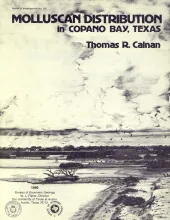
Benthic samples were collected on a 1-mi grid from Copano Bay, Texas, in March and April, 1976. Seventy-four molluscan species, including 33 pelecypods, 40 gastropods, and 1 scaphopod were taken from 93 stations in Copano Bay. Molluscan distribution was correlated with gross sediment, salinity, feeding type, and total organic carbon content. Seven sediment types were mapped in Copano Bay. The mud and sand end-members had fewer molluscan species and live individuals, whereas the muddy sands had the highest number of live individuals.
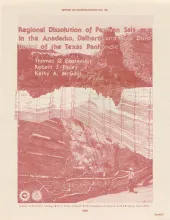
A broad zone of salt dissolution that affects parts of the Permian Salado, Seven Rivers, San Andres, Glorieta, and upper Clear Fork Formations occurs beneath the Canadian River Valley from New Mexico eastward toward Amarillo, Texas, and southeastward parallel to the eastern Caprock Escarpment. Structure contours on the base of the Tertiary Ogallala Formation show broad areas with as much as 120 m (400 ft) of relief that are attributed to salt dissolution and subsidence in the Anadarko Basin and along the northern and eastern margins of the Palo Duro and Dalhart Basins.
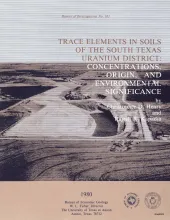
The environmentally sensitive trace elements molybdenum, arsenic, and selenium are concentrated with uranium in ore deposits in South Texas. Cattle grazing in some pastures in mining areas have contracted molybdenosis, a cattle disease resulting from an imbalance of molybdenum and copper. To determine natural concentrations of the elements in soils in the South Texas area and to evaluate possible effects of mining on adjacent agricultural land, two sets of soil samples were collected and analyzed for molybdenum, arsenic, selenium, and copper.
Texas lignite occurs in three Eocene (lower Tertiary) geologic units--the Wilcox Group, Jackson Group, and Yegua Formation--and in three ancient depositional systems--fluvial, deltaic, and strandplain/lagoonal. Near-surface resources in Texas at depths between 20 and 200 ft (6.1 and 61 m) in seams 3 ft (0.9 m) or thicker are 23,377 million short tons (21,208 million metric tons) and are dominantly fluvial in origin. More than 90 percent of the resources occur in the Wilcox and Jackson Groups north of the Colorado River.