The stratigraphic record of the Lower Cretaceous Trinity Division in Central Texas, as revealed by extensive outcrop investigation, is that of a shallow sea transgressing the southern flank of the ancient Llano Uplift. This history is demonstrated by the overlap of marine carbonates on terrigenous facies representative of nearshore or onshore deposition and by sedimentary features indicative of various shallow-water environments of the marine shelf.
The Woodbine Formation is composed largely of terrigenous sediment eroded from Paleozoic sedimentary and weakly metamorphosed sedimentary rocks of the Ouachita Mountains in southern Oklahoma and Arkansas and subsequently deposited in a complex of nearshore environments along the margins of the broadly subsiding Northeast Texas Basin. Three principal depositional systems are recognized in Woodbine rocks--a fluvial system, a high-destructive delta system, and a shelf-strandplain system.
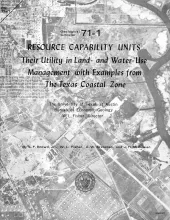
A resource capability unit is an environmental entity--land, water, area of active process, or biota--defined in terms of the nature, degree of activity, or use it can sustain without losing an acceptable level of environmental quality. Units are established by recognizing elements of first-order environmental significance, whether dominantly physical, biologic, or chemical.
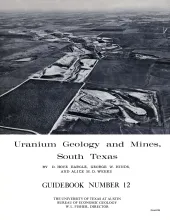
In recent years, exploration and mining of uranium have become a significant part of the Texas mineral scene, with Texas emerging as a leading uranium-producing state. At the end of 1970, Texas ranked third in reserves among the states, with ore reserves of 6.6 million tons. Continuation of the recent high level of exploration is shown by the 6.1 million feet of drilling in Texas during 1970, surpassed only by drilling activity in Wyoming.